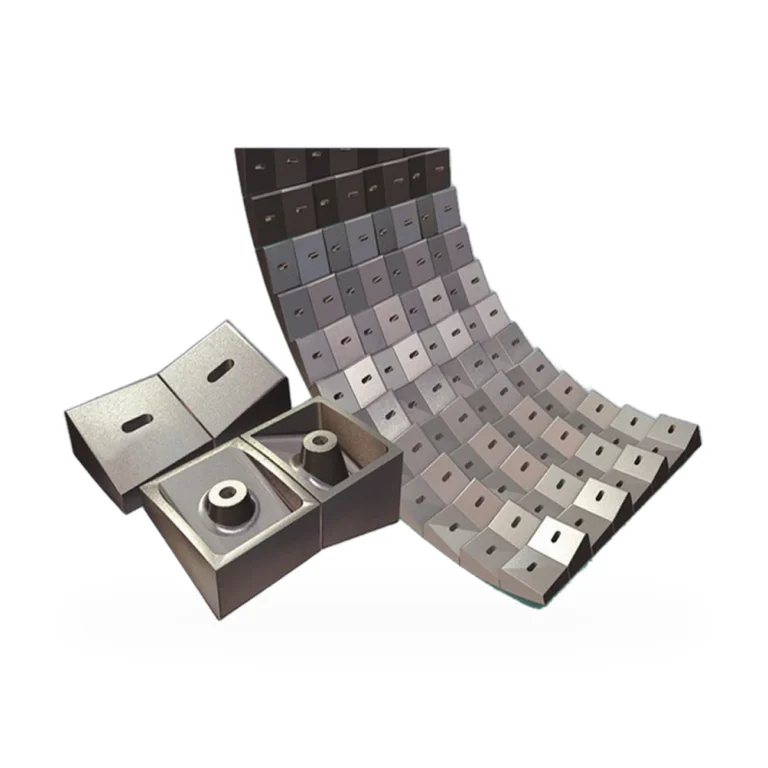
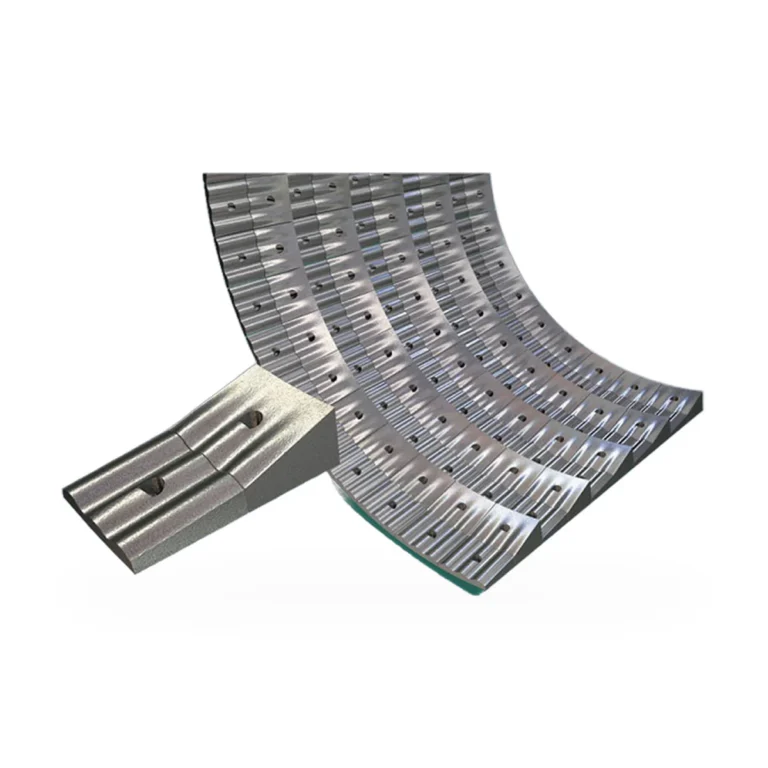
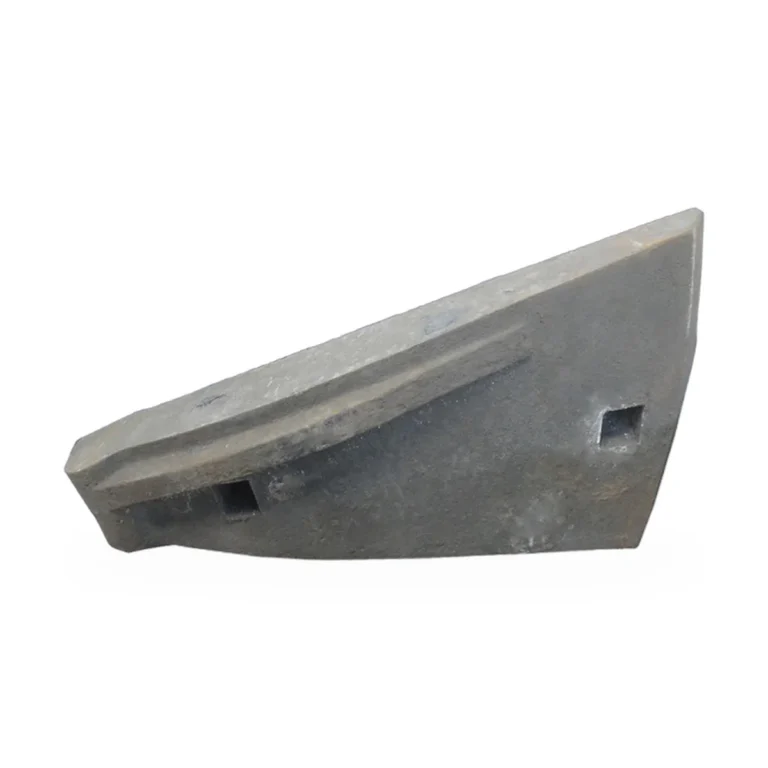
Rod mills grind with a charge of steel rods instead of balls, and the rods lie parallel to the mill axis. That changes the liner job: the wave profile has to lift the rod charge without trapping rods, and the end liners take a concentrated load where the rods bear on the head.
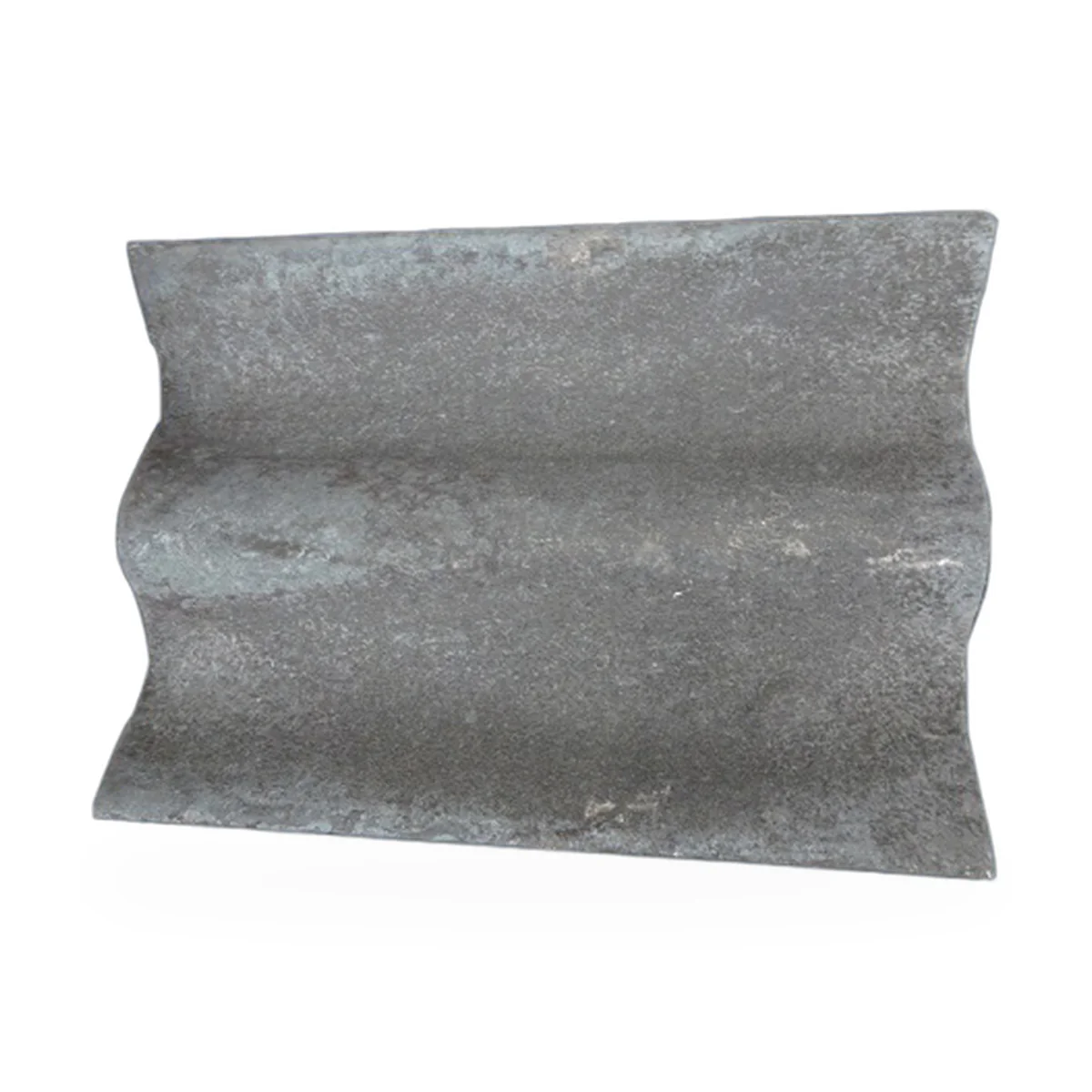
Grindium casts rod mill shell liners in wave or step profile, plus feed and discharge end liners and trunnion liners, in Mn13Cr2 or Cr-Mo steel. Plates are matched in height across the set so the rods do not ride on a single high plate.
Specifications
Item
Range
Mill diameter
1.5-4.5 m
Plate thickness
40-100 mm
Profile
Wave, step or smooth
Material
Mn13Cr2 / Cr-Mo / high chrome
Hardness
HB 180-380 depending on grade
Single weight
60-900 kg
Design points for rod mills
Wave height set to the rod diameter so rods roll instead of sliding
End liner thickness increased where the rod ends bear on the head
Plate joints staggered to avoid a continuous wear groove
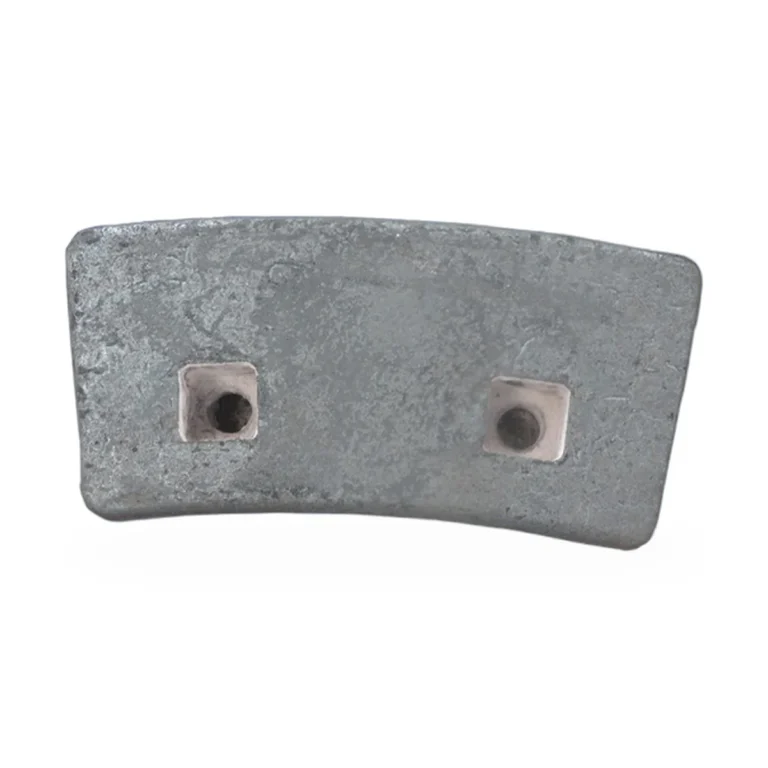
Trunnion liner matched to the trunnion diameter with a controlled clearance
A wave or step profile with the wave height set to the rod diameter, so the rods roll instead of sliding, and staggered plate joints to avoid a continuous wear groove.
What materials do you cast?
Mn13Cr2, Cr-Mo and high chrome, typically HB 180-380 depending on the position.
What sizes do you cover?
Mills from 1.5 m to 4.5 m diameter, plate thickness 40-100 mm, 60-900 kg per piece.
What is the MOQ and lead time?
One set; 30-40 days, including pattern making where a new profile is needed.
Can you supply the grinding rods as well?
Yes - rods from 40 mm to 120 mm, heat treated to HRC 45-55, shipped with the liner set so the charge and profile are matched.