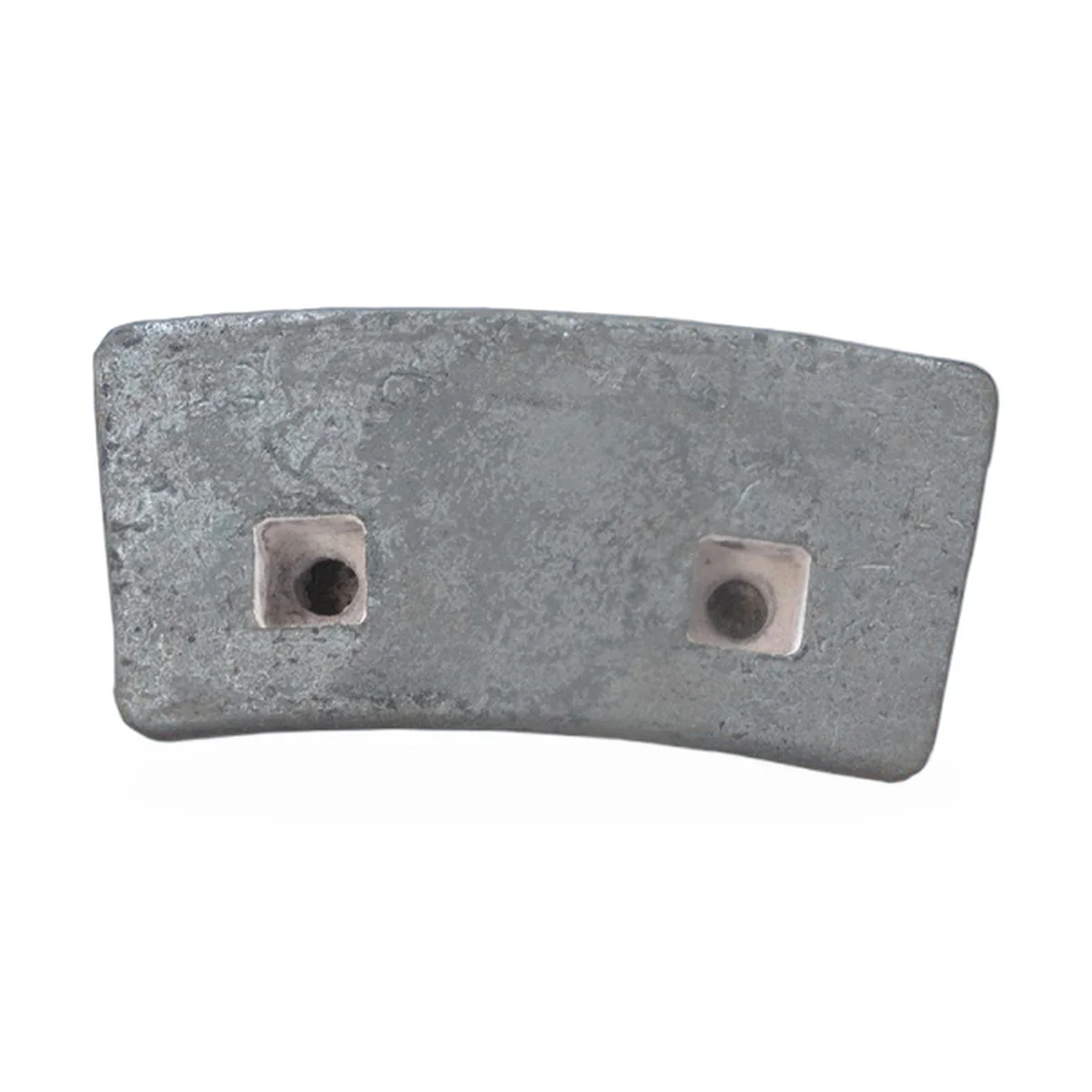
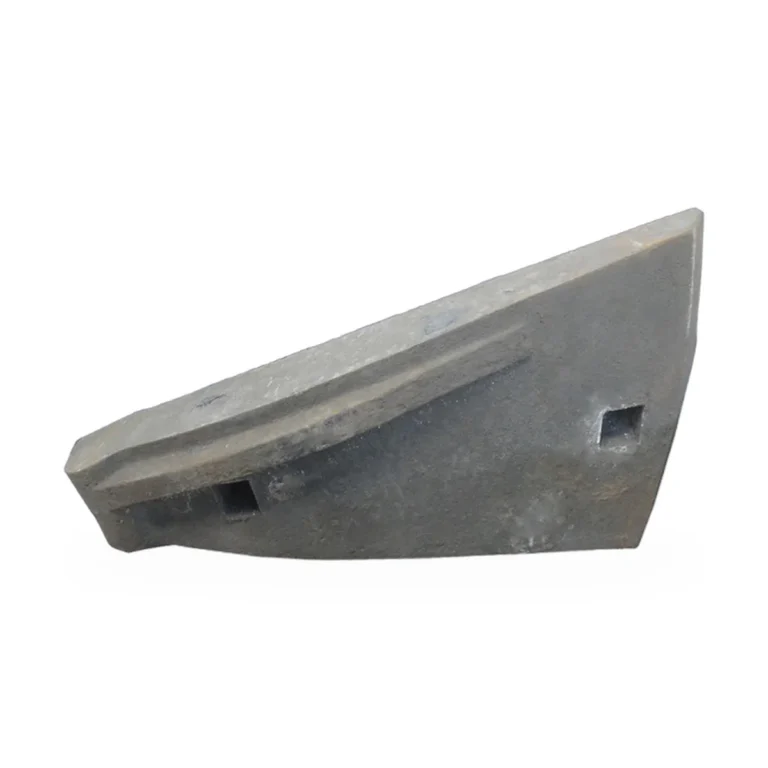
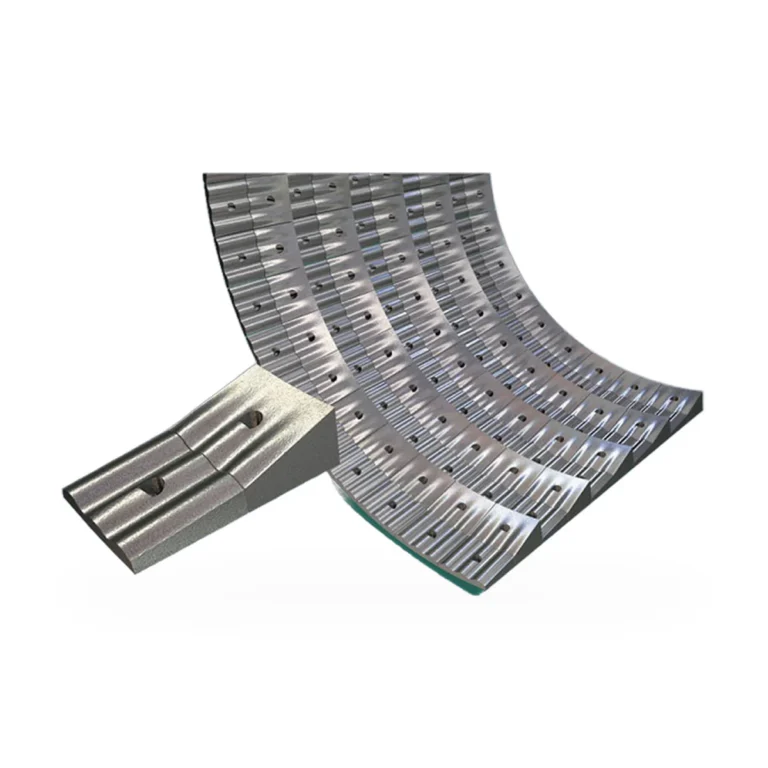
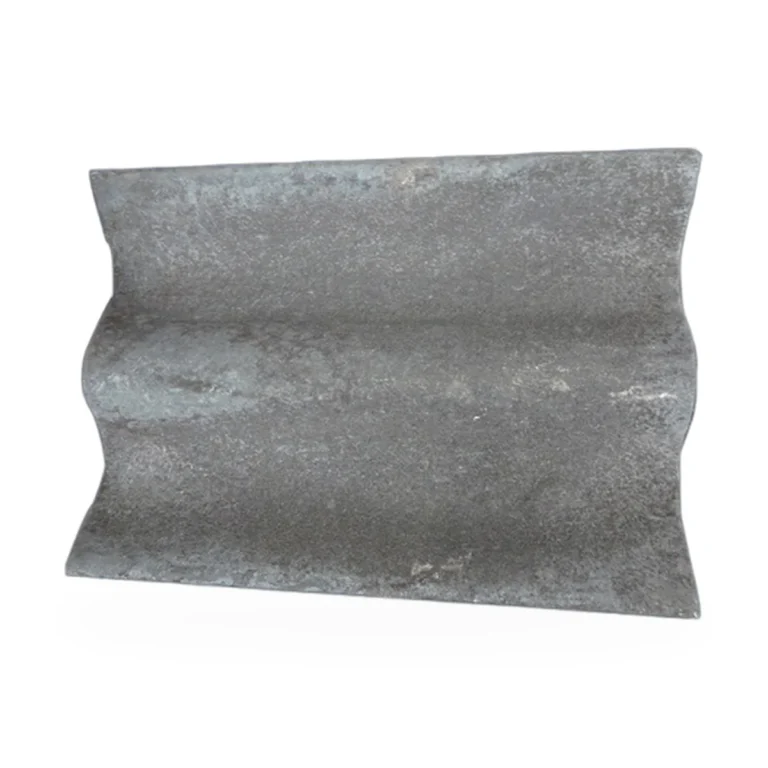
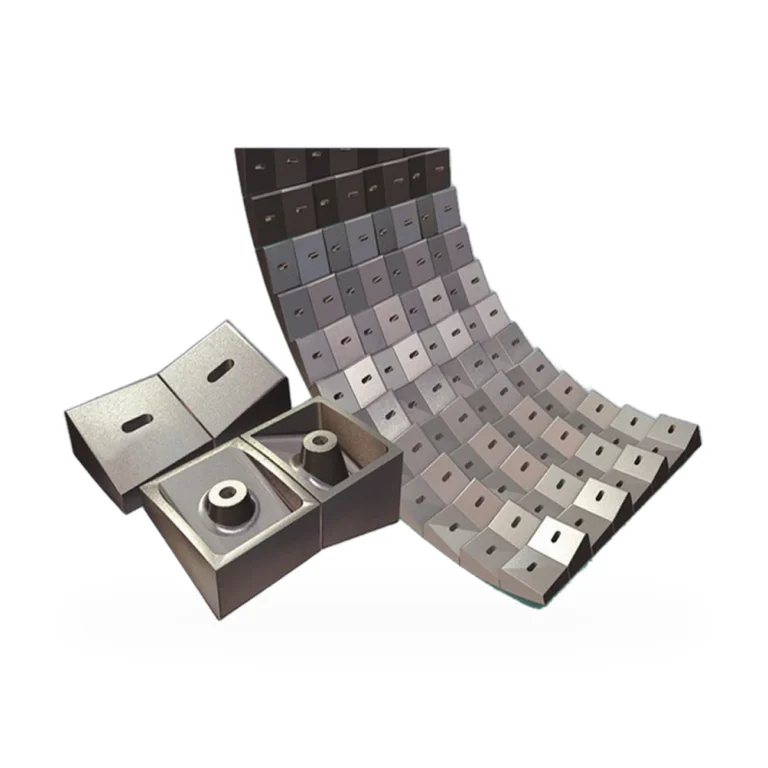
The grate plate is the last wear part the slurry touches before it leaves the mill, and it sets the product top size. Too wide a slot and coarse particles report to the cyclone; too narrow and the mill floods. Grindium casts grate plates with the slot width you specify, in high chrome Cr26 where abrasion is the main wear mechanism.
Grates are supplied with the discharge end liner and the pulp lifter as a matched set, so the slot opening and the lifter height work together.
Specifications
Item
Range
Slot width
6, 8, 10, 12, 15, 20 mm (custom on request)
Plate thickness
40-100 mm
Material
High chrome Cr26 / Cr-Mo / Mn13Cr2
Hardness
HRC 58-62 (Cr26)
Single weight
40-500 kg
Open area
Set to your circulating load
When to replace
Slot width has opened by more than 20% against the drawing
Product P80 has coarsened without a change in feed
Visible cracking between slots, or a plate has dropped
The slot width sets the product top size and the slurry flow out of the mill. Too wide and coarse particles report to the cyclone; too narrow and the mill floods.
What slot widths do you cast?
6, 8, 10, 12, 15 and 20 mm as standard, with custom widths on request.
What material and hardness?
High chrome Cr26 at HRC 58-62 for abrasion resistance, or Cr-Mo and Mn13Cr2 where impact is higher.
What is the MOQ and lead time?
One set; 30-40 days. Grate plates are normally supplied with the discharge end liner and pulp lifter as a matched set.
When should a grate be replaced?
When the slot width has opened by more than 20% against the drawing, when product P80 coarsens without a feed change, or when cracks appear between slots.