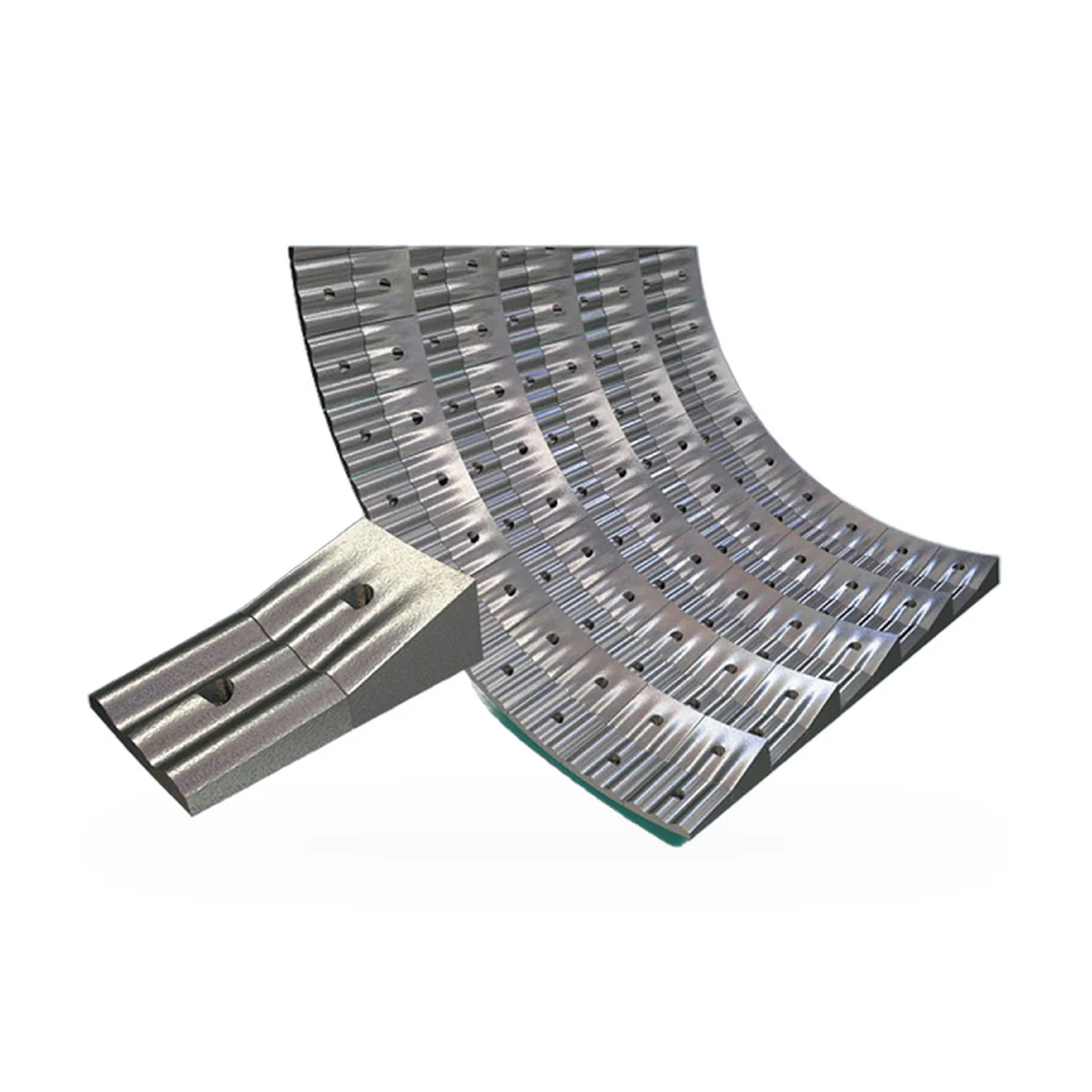
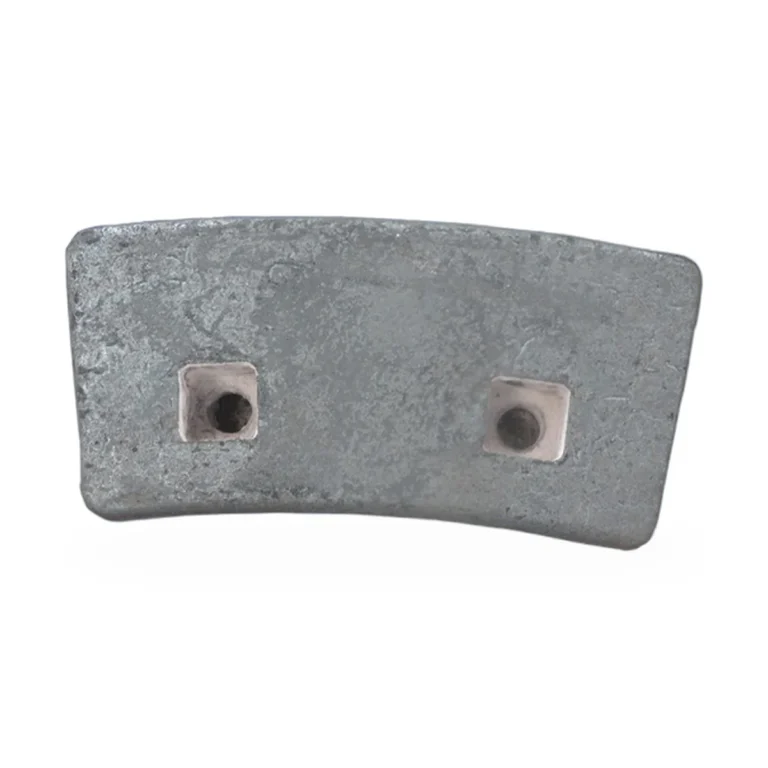
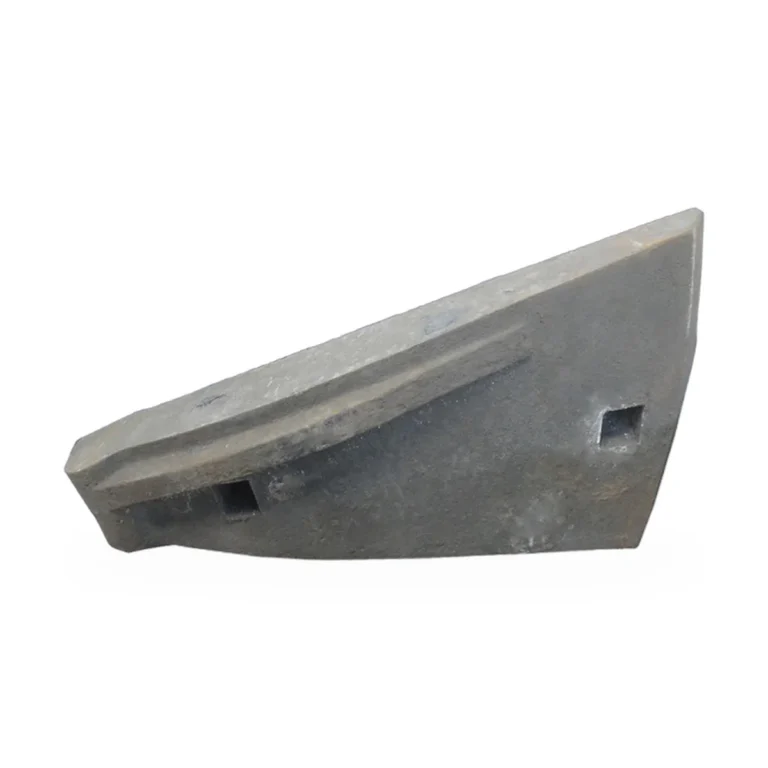
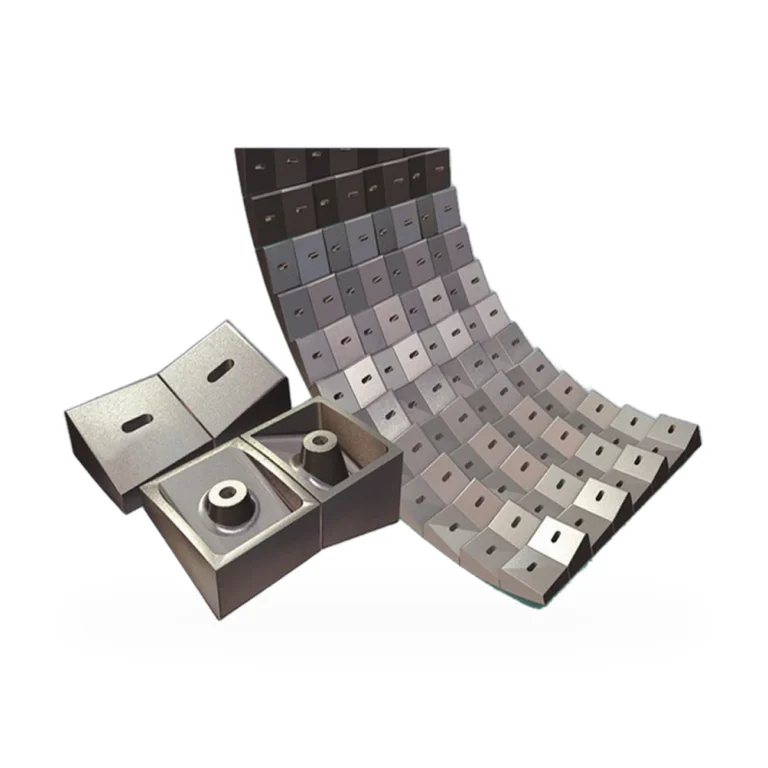
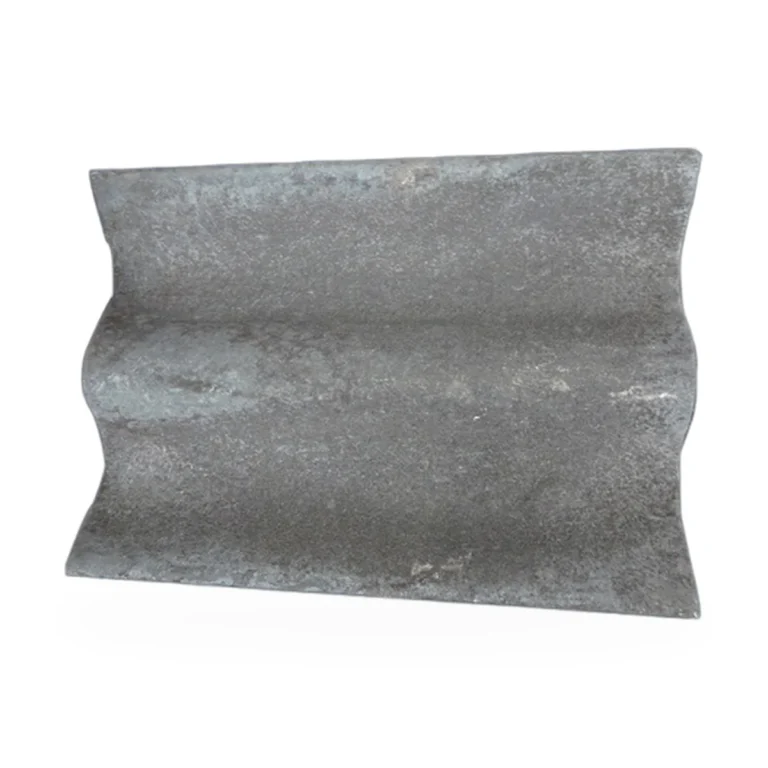
In a cement mill the first chamber breaks clinker with large balls and high impact, while the second chamber grinds finer with small balls and needs a classifying profile that keeps the charge in the right section. Grindium casts both chamber liners, plus the diaphragm and end liners, in the alloy that matches each zone.
First chamber liners are usually Mn13Cr2 or Cr-Mo with a step profile for lifting; second chamber liners are classifying or wave profile in Cr-Mo or high chrome, where abrasion dominates and impact is low.
Chamber-by-chamber selection
Position
Recommended material
Profile
Why
1st chamber shell
Mn13Cr2 / Cr-Mo
Step or wave
High impact, needs work hardening
2nd chamber shell
Cr-Mo / high chrome Cr26
Classifying
Abrasion dominant, size classification
Diaphragm
Cr-Mo / high chrome
Slotted
Controls material flow between chambers
End liners
Mn13Cr2
Smooth
Impact from the ball charge
Specifications
Item
Range
Plate thickness
40-120 mm
Single weight
80-1,200 kg
Hardness (Mn13Cr2)
HB 180-220, work hardened to 450+
Hardness (high chrome)
HRC 58-62
Bolt hole tolerance
+/-1.5 mm
Pattern life
Kept for repeat orders
Why cement plants buy from Grindium
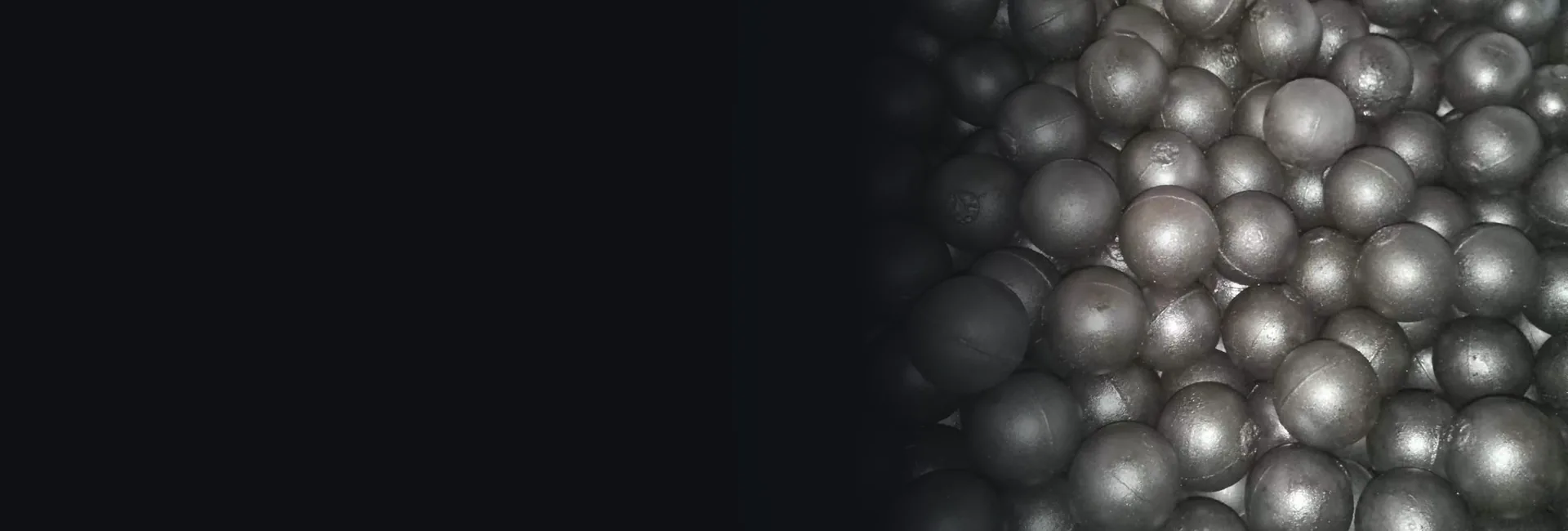
Liner and grinding ball supplied together, so the charge and the profile are designed as one system
Classifying liner profile matched to your mill speed and target Blaine fineness
Diaphragm slot width set for your clinker and gypsum ratio
Set-by-set packing, marked by chamber position for faster installation
Send the mill diameter, chamber length, current liner drawing and target output (t/h). We will propose a profile and alloy combination with an expected wear life. Request a cement mill liner quote.
The first chamber needs a lifting profile for large balls and high impact, while the second chamber needs a classifying profile that keeps the charge in the right section for fine grinding.
Which materials for each chamber?
First chamber: Mn13Cr2 or Cr-Mo. Second chamber: Cr-Mo or high chrome Cr26. Diaphragms in Cr-Mo or high chrome.
Can you match the profile to my fineness target?
Yes - we set the classifying profile from your mill speed, chamber length and target Blaine, and adjust the diaphragm slot width to your clinker.
What is the MOQ and lead time?
One mill set; 35-45 days, including pattern making for a new profile.
Do you supply the diaphragm and end liners too?
Yes, as one matched set, packed and marked by chamber position.