Mill Grinding Balls, Grinding Cylpebs and Grinding Rods
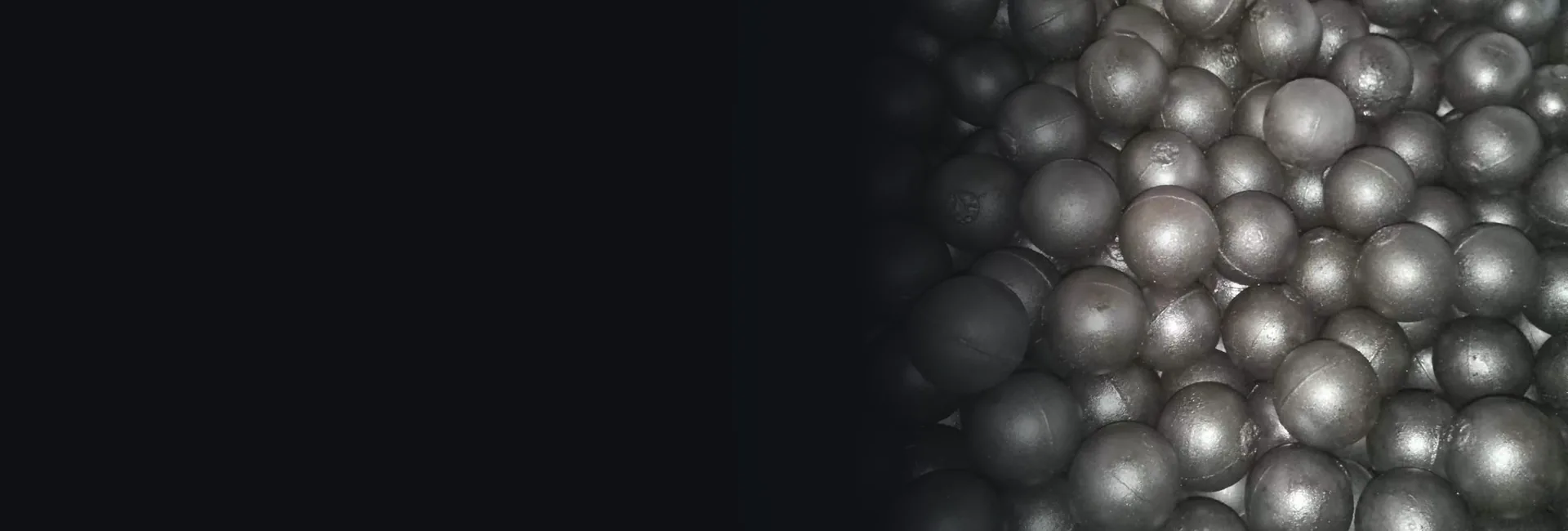
Grinding Media for Gold Mining
Gold ore is usually hard and abrasive, and the grinding circuit is where most of the wear cost sits. A typical gold plant runs a SAG mill followed by a ball mill, so the media has to cover two different wear regimes: high-energy impact in the SAG, and fine abrasive grinding in the ball mill.
Recommended media
| Mill | Ball size | Material | Why |
| SAG mill | 90-125 mm | Forged 60Mn / 65Mn / B2 / B3, HRC 58-62 | Impact toughness 15 J/cm2, breakage under 0.5% |
| Ball mill, primary | 60-80 mm | Forged B2 / B3, HRC 58-62 | Balanced toughness and wear |
| Ball mill, secondary | 40-60 mm | Forged or high chrome cast, HRC 58-65 | Abrasion resistance in fine grinding |
| Regrind / IsaMill feed prep | 20-40 mm | High chrome cast, HRC 60-65 | Maximum wear life |
What drives cost in a gold circuit
- Media consumption in kg per tonne of ore – the single biggest variable
- Ball breakage, which adds cost and can damage the mill liner
- Over-grinding, which wastes power and can hurt flotation recovery
- Liner life, especially in the SAG where impact dominates
Typical consumption for gold circuits falls between 0.6 and 1.5 kg per tonne of ore, depending on ore hardness and grind size. If your number is at the top of that range, a higher-toughness forged grade or a rare earth modified ball usually pays back within one lining cycle.
Related: SAG mill grinding balls | rare earth alloy grinding balls | SAG mill liners
Ask for a gold circuit media recommendation – send ore type, mill size and current g/t.
